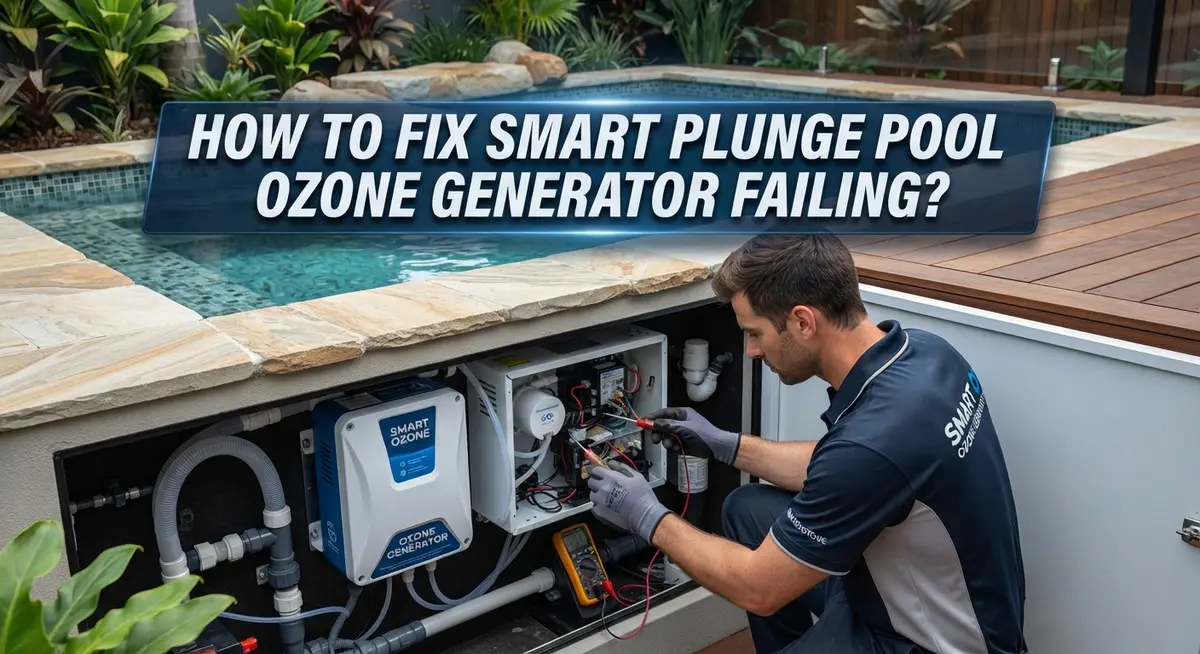
How To Fix Smart Plunge Pool Ozone Generator Failing?
Your smart plunge pool ozone generator keeps water clean and safe. But when it stops working right, your whole system suffers.
Ozone failures are more common than you think. The good news? Most problems have simple fixes.
Maybe your generator shows no lights. Maybe you smell ozone in the air instead of seeing clean water. Or perhaps your plunge pool feels less fresh than before.
These signs point to specific issues. Power problems, damaged tubing, and poor water mixing top the list of culprits.
In a Nutshell
- Check the power source first. Make sure the generator gets steady power. Look for indicator lights or error codes.
- Inspect the tubing carefully. Cracks or damage stop ozone from reaching your water. Replace damaged tubing right away.
- Run your filtration system properly. Start filtration 24 hours before you turn on ozone. This step helps ozone mix well with water.
- Balance your water chemistry. Test and adjust chemicals before startup. Unbalanced water can cause ozone to underperform.
- Watch for overheating or backflow. These signs mean something is wrong inside your system. Turn off the unit and inspect it closely.
- Avoid common setup mistakes. Oversized generators often cause more harm than good. Kitchen grade units are not built for plunge pools.
How Ozone Generators Sanitize Your Plunge Pool
Ozone generators work by converting oxygen into ozone gas. This gas then enters your plunge pool water through a diffuser or injection system. The ozone molecules attack bacteria, viruses, and other contaminants on contact. This process kills harmful microorganisms without leaving chemical residue in your water.
Here’s what makes ozone effective for sanitization. Ozone is a powerful oxidizer that breaks down organic matter quickly. It destroys pathogens faster than chlorine alone. The gas disperses throughout your pool as water circulates through the system.
Your circulation pump plays a critical role in this process. Without proper water flow, ozone cannot reach all areas of your plunge pool. The pump moves treated water back into the basin continuously. This ensures even distribution of ozone throughout the entire volume.
The key is complete water contact. Ozone must mix thoroughly with your pool water to work effectively. If water bypasses the ozone injection point, sanitization fails. Your tubing system delivers ozone to the right location inside the circulation line.
Some ozone naturally escapes into the air instead of staying in your water. This is normal, but it means your system must produce enough ozone to account for this loss. Proper installation minimizes air escape and maximizes water treatment.
Water chemistry matters too. Your pool’s pH and alkalinity levels affect how well ozone performs. Unbalanced water reduces ozone’s sanitizing power. The generator also works harder when water conditions are poor, which can cause premature failure.
Before your ozone system even starts, your filtration system must run for 24 hours. This removes particles that interfere with ozone distribution. Clean filters allow ozone to reach every part of your water effectively.
Proper Setup: Filtration and Water Chemistry Before Startup
Your filtration system is the foundation of a working ozone generator. Before you turn on your ozone system, run your filter for a full 24 hours. This step removes debris and prepares your water for chemical treatment.
Start by backwashing or cleaning your filter cartridge. A dirty filter blocks water flow and prevents ozone from mixing properly with your plunge pool water. Clean filters also help your circulation pump work efficiently without strain.
Next, test your water chemistry using a reliable test kit. Check your pH level first. Ozone works best when pH stays between 7.2 and 7.8. If your pH is too high or too low, adjust it before startup.
Measure your alkalinity level too. Alkalinity should sit between 80 and 120 parts per million. Proper alkalinity keeps your pH stable and helps ozone sanitize more effectively.
Don’t skip calcium hardness testing. Low hardness can damage your equipment. High hardness causes cloudy water and reduces ozone performance. Aim for 200 to 400 parts per million.
After balancing chemicals, let your filtration run another 12 hours. This allows chemicals to distribute evenly throughout your plunge pool. Unbalanced water entering your ozone generator causes malfunction and shortens equipment life.
Check your circulation pump is running smoothly. Listen for unusual sounds. Feel the tubing to confirm water flows steadily. Weak water flow means ozone won’t contact your water properly, making sanitization fail.
Proper setup prevents most ozone generator failures. Taking time to filter and balance your water before startup saves you troubleshooting headaches later. Your ozone system depends on clean, balanced water to function as designed.
Signs Your Ozone Generator Is Failing
Your ozone generator shows clear warning signs when it starts to fail. Recognizing these signals early helps you fix problems before they get worse.
Weak sanitization is the first red flag. If your plunge pool water looks cloudy or smells off despite running your ozone system, your generator may not be producing enough ozone. The water should stay crystal clear with proper ozone treatment.
Check for unusual sounds or vibrations. A healthy ozone generator runs quietly. Strange buzzing, grinding, or rattling noises mean internal parts are struggling. These sounds often signal that your system needs attention soon.
Look at your indicator lights. Most generators display power status and error codes. Flickering lights or missing indicators tell you something is wrong. Red or amber warning lights mean your system detected a problem.
Feel the unit for excessive heat. Your ozone generator should stay warm but not hot to touch. Overheating damages internal components and reduces ozone production. If it feels too hot, turn it off immediately.
Watch for water leaks around the system. Moisture inside your generator causes electrical issues and reduces effectiveness. Cracks in tubing or loose connections let water escape or backflow into sensitive parts.
Notice reduced water flow through the system. A blocked or damaged line prevents proper ozone delivery to your pool. Your circulation should feel consistent and strong.
Pay attention to chemical imbalances. If your water chemistry keeps dropping even with ozone running, your generator may not be working correctly. Ozone should naturally help maintain water quality.
These signs mean your ozone generator needs troubleshooting right away. Acting quickly prevents complete system failure and keeps your plunge pool safe and clean.
Step-by-Step Troubleshooting Guide
Start by checking if your circulation pump is actually running. Feel the tubing near your pump to see if water flows through it. If you don’t feel movement, your pump may have stopped working or lost power. Check the electrical outlet and make sure the pump switch is turned on.
Next, inspect the ozone generator itself for power. Look at any indicator lights on the unit. If no lights appear, verify the power cord connects securely to a working outlet. Press the power button and listen for sounds. A working generator makes a soft humming noise.
Examine all tubing connected to your ozone system carefully. Look for cracks, splits, or loose connections. Even small holes let ozone escape before it reaches your water. Squeeze the tubing gently to feel for soft spots or damage. Replace any damaged sections immediately.
Check for water inside the ozone generator housing. This is a serious problem. Water damage occurs when backflow happens or condensation builds up. If you see moisture inside, stop using the system right away. The unit needs to dry completely before restarting.
Feel the exterior of your generator with your hand. It should feel warm but not hot. Excessive heat means the unit is working too hard or has internal problems. If it’s burning hot to touch, turn it off and let it cool.
Look for water pooling around your system. Leaks indicate connection problems or internal failure. Tighten all fittings where tubing connects to the generator. If leaking continues, you may have a cracked component that needs replacement.
Test your water chemistry again using a test kit. Wrong pH or alkalinity levels can make your generator perform poorly or shut down automatically for protection.
Checking Tubing, Connections, and Circulation Pump Issues
Your circulation pump is the heart of your ozone system. Without it running, ozone never reaches your water. Start by checking if the pump actually turns on when you power it up.
Listen for a humming sound coming from the pump motor. Feel the pump housing with your hand to see if it vibrates slightly. If you hear nothing and feel no vibration, your pump may have stopped working.
Next, trace all tubing connections from your pump to your ozone generator. Look for loose fittings where water lines connect. A loose connection lets air escape instead of pushing water through the ozone chamber.
Inspect every inch of tubing for visible cracks or splits. Damaged tubing causes water to leak out before it reaches your generator. This reduces the water flow your ozone system needs to work properly. Even small cracks matter because they break the circulation cycle.
Check where tubing enters your ozone generator housing. Water should flow in smoothly without kinks or pinches in the line. A kinked tube blocks water movement and starves your generator.
Look underneath and around your ozone generator for puddles or wet spots. Water pooling here means your system has a leak somewhere in the connection points. Backflow into your generator also causes problems. This happens when water flows backward into the unit instead of forward through it.
Tighten all connection fittings by hand first. Use a wrench if needed, but don’t overtighten because you can crack the fittings. After securing connections, run your pump for five minutes and check again for leaks.
These simple checks solve most circulation and connection problems before they damage your equipment.
Common Mistakes That Cause Ozone Generator Failure
Many people make simple setup mistakes that cause their ozone generators to fail before they even start working properly. Understanding these errors helps you avoid expensive repairs and wasted time.
The biggest mistake is using an oversized generator for your plunge pool. Many people buy powerful ozone systems designed for large swimming pools or hot tubs. These units produce too much ozone for a small cold plunge. The excess ozone cannot dissolve properly in your water. Your system becomes overwhelmed and fails to function correctly.
Another common error is choosing the wrong type of generator altogether. Some people purchase kitchen or food grade ozone machines thinking they will work for water sanitization. These units use different technology and materials than pool equipment. They break down quickly when exposed to pool water and chemicals.
Skipping pre startup preparation causes most failures. Many people turn on their ozone system immediately after installation. Your filtration system needs to run for at least 24 hours first. You must backwash and clean your filter before starting. Your water chemistry must be balanced and tested with a proper kit.
Running your ozone generator without this preparation puts stress on the system. Dirty water clogs the ozone injection points. Unbalanced chemicals react badly with ozone. Both problems cause your generator to fail rapidly.
Starting with clean, balanced water is essential. Test your pH, alkalinity, and sanitizer levels before turning on your ozone system. Make sure your circulation pump runs smoothly for a full day. These simple steps prevent 80 percent of early ozone generator failures. You avoid expensive damage by taking time upfront.
When to Reset, Restart, or Reinstall Your System
Your ozone generator needs a reset, restart, or reinstall when it stops working effectively. Understanding the difference between these three actions helps you fix the problem faster.
A reset clears temporary errors in your system’s memory. Turn off power to your generator for 30 seconds, then turn it back on. This simple action fixes most minor glitches and restores normal operation. Check your indicator lights after power returns. If they show green or normal status, your reset worked.
A restart means stopping and starting your entire ozone system fresh. This differs from a reset because you’re also checking all connections and water flow before turning everything back on. Stop your circulation pump first. Wait five minutes for pressure to drop. Inspect tubing and fittings for loose connections. Then restart your pump and generator together. This approach catches connection problems a simple reset might miss.
Reinstall your system when resets and restarts fail repeatedly. This means removing your generator completely, checking all components for damage, and setting everything up again from scratch. Disconnect power first. Remove tubing connections carefully. Inspect the generator housing for cracks or water damage inside. Check all tubing for splits or blockages. Clean or replace filters before reconnecting everything.
Start with a reset first. If your generator still fails after 24 hours, try a restart. Only attempt a full reinstall if both options don’t restore function. Each step takes 15 to 30 minutes and saves you from unnecessary troubleshooting. Keep your system powered off during any inspection to stay safe. Document what you observe at each stage so you can explain the problem clearly if professional help becomes necessary.
Preventive Maintenance Tips for Long-Term Reliability
Your ozone generator stays reliable when you follow a simple maintenance schedule. Check your system weekly to catch small problems before they become big ones.
Start by inspecting your tubing every seven days. Look for cracks, cloudiness, or brittleness in the material. UV light and ozone exposure weaken tubing over time. Replace any damaged sections immediately to prevent water leaks into your generator.
Clean your filter regularly according to manufacturer guidelines. A clogged filter reduces water flow through your ozone system. Poor circulation means ozone cannot mix properly with your plunge water. Backwash your filter at least once monthly or when pressure rises noticeably.
Test your water chemistry every week. Ozone works best in balanced water with proper pH and alkalinity levels. Unbalanced water reduces ozone effectiveness and stresses your generator. Keep your pH between 7.2 and 7.6 for optimal performance.
Keep your generator dry and cool. Check for moisture around the unit monthly. Wipe away any condensation with a dry cloth. Ensure your generator sits in a well ventilated area away from direct sunlight. Overheating shortens the lifespan of internal components.
Listen to your circulation pump monthly. A healthy pump makes a steady humming sound. Strange noises or grinding sounds indicate wear. Address pump issues quickly before they damage your entire system.
Schedule a full system inspection every three months. Examine all connections, fittings, and electrical components. Tighten any loose connections by hand. Replace worn gaskets or seals before they fail.
Document your maintenance activities in a simple log. Write down inspection dates, any repairs made, and parts replaced. This record helps you spot patterns and predict future maintenance needs. Regular upkeep prevents emergency failures and extends your generator’s working life significantly.
Final Thoughts
Fixing your ozone generator does not need to feel hard. Most problems come from simple issues like loose connections or dirty filters.
Start with the basics every time. Check your power supply first. Then look at your tubing and circulation pump.
Prevention saves you time and money. Running filtration before startup keeps your system healthy. Balanced water chemistry protects your generator from unnecessary stress.
Many failures happen because of avoidable mistakes. Oversized generators strain your plunge pool system. Kitchen grade units simply are not built for this job.
Your ozone generator works best with proper care. Regular tubing checks catch cracks early. Weekly water tests keep everything balanced.
Sometimes your system needs more than cleaning. A reset clears small glitches quickly. A restart refreshes your entire setup when problems continue.
Reinstalling becomes necessary only when other steps fail. This full process fixes deeper issues inside your system. Think of it as your final troubleshooting option.
Documentation makes future fixes easier. Write down what you check each week. Note any changes you notice in performance.
This record helps you spot patterns over time. You will notice if certain problems repeat monthly. That pattern often points to the real cause.
Your plunge pool deserves a reliable ozone system. Following these steps keeps your water clean and safe. Small efforts now prevent bigger headaches later.
Trust the process and stay consistent. Troubleshooting becomes simple once you know the steps. Your system will reward you with steady performance.
Remember that patience matters here too. Some fixes take a few tries to work. Stick with the basics and your generator will run smoothly again.
Frequently Asked Questions
Why is my ozone generator not producing ozone?
Your circulation pump might not be running. Ozone needs water flow to work properly. Check that your pump is powered on and moving water through the system.
Also verify your generator has electricity. Look for indicator lights or error codes on the display. If you see no lights, check your power outlet and cables.
Inspect your tubing for cracks or damage. Water leaks mean ozone escapes instead of mixing with your pool. Even small holes reduce effectiveness.
Can I use a kitchen ozone generator for my plunge pool?
No. Kitchen or food-grade ozone generators are not designed for water systems. They lack the safety features and power output your plunge pool needs.
Using the wrong type creates problems. The generator may overheat or fail quickly. Your water won’t get properly sanitized.
Choose a generator rated for cold plunge pools specifically. This ensures safe operation and effective results.
What should I do before starting my ozone system?
Run your filtration system for 24 hours first. This cleans your water and prepares it for ozone treatment.
Backwash or clean your filter before startup. Test your pH, alkalinity, and sanitizer levels. Balanced water protects your generator from stress and damage.
Skip this step and your system may fail prematurely. Clean, balanced water is the foundation for success.
How do I know if water is getting inside my generator?
Look for water damage around the unit or tubing connections. Check for corrosion, rust, or wet spots near electrical components.
Listen for unusual sounds during operation. Hissing or crackling suggests moisture inside. Turn off the system immediately if you notice these signs.
Inspect all connection points monthly. Tighten loose fittings to prevent backflow into your generator.

Hi, I’m Sonny Dawson, the creator and voice behind ConvertResizeGen. 👋 I’m a passionate tech enthusiast who loves exploring the latest gadgets, devices, and electronics that shape the way we live and work. Through my website, I share honest, hands-on reviews of trending Amazon products to help you make smarter buying decisions.