Why Is My Smart Yoga Mat Not Detecting Posture Correctly?
Your smart yoga mat promised real time feedback. Instead, it flags your perfect Warrior II as a slouchy Mountain Pose. Frustrating, right? You bought the mat to improve alignment, not to argue with an app mid flow.
The good news is that most posture detection issues come from fixable causes. Sensors get confused. Apps lose sync. Calibration drifts. Even your socks can throw off pressure readings.
This guide walks you through every common reason your smart mat misreads your poses, and gives you clear steps to fix each one.
Key Takeaways
- Calibration is the top fix. Most posture errors come from a mat that was never recalibrated after you updated your height, weight, or moved to a new floor. Run the calibration routine first.
- Sensor cleanliness matters more than you think. Sweat, dust, lotion, and oils block pressure sensors and confuse weight readings. Wipe your mat down before every session with a damp cloth.
- Bluetooth and Wi Fi drops cause fake errors. When the mat loses connection, the app guesses your pose from old data. Keep your phone within six feet and disable competing Bluetooth devices.
- Firmware updates fix recognition bugs. Manufacturers often push pose library improvements through software. Check for updates monthly to keep accuracy high.
- Surface and clothing affect detection. Carpet absorbs pressure signals. Thick socks scatter foot placement data. Use a flat hard floor and practice barefoot for the best results.
- Body position assumptions matter. Smart mats expect your body to land within marked zones. Center yourself on the mat and face the direction the app expects.
Understanding How Your Smart Yoga Mat Detects Posture
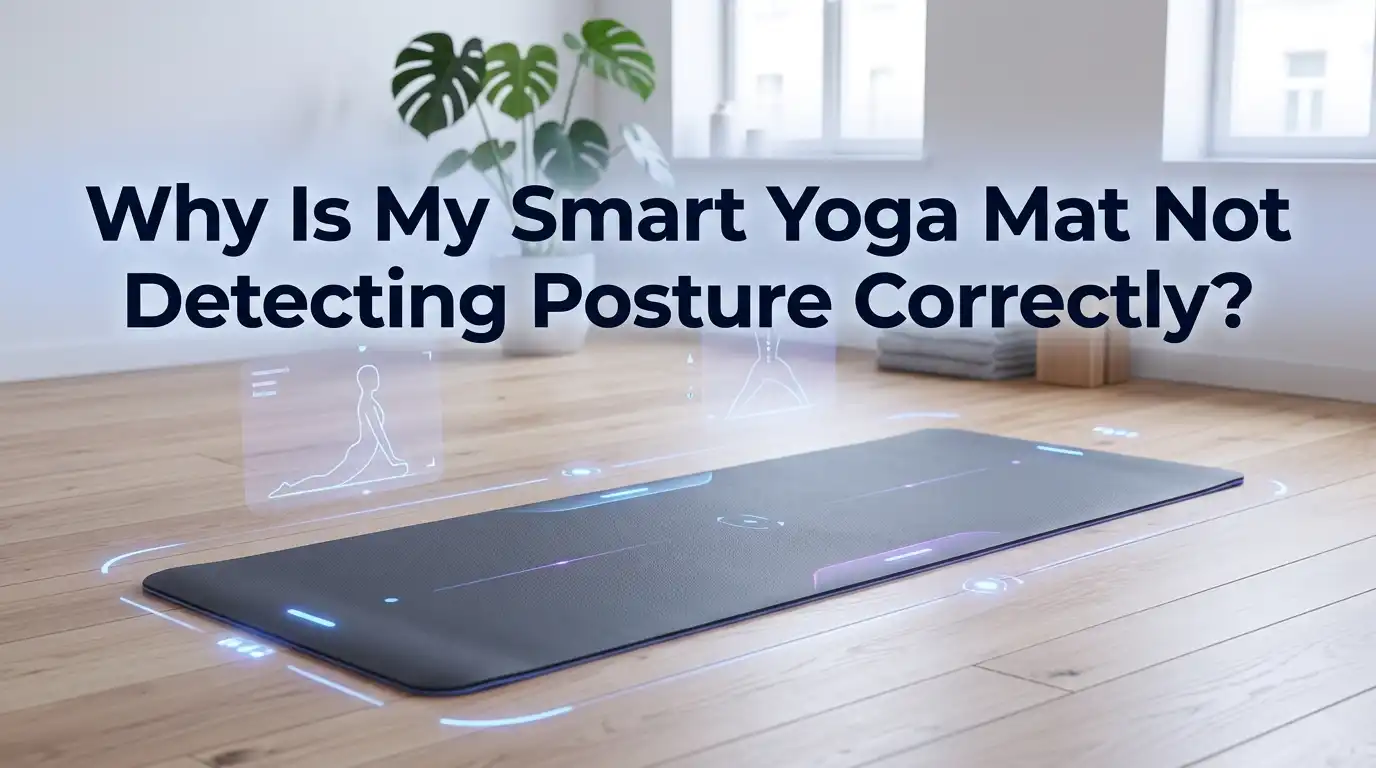
Your smart mat uses a grid of piezoresistive pressure sensors embedded between thin layers of PVC or TPE. These sensors measure where your hands, feet, knees, and hips press down. The mat sends this data to an app, which compares your pressure pattern to a library of known poses.
Some mats add gyroscopes, accelerometers, or even small cameras to confirm body angle. The app uses machine learning to match your pressure map to a pose name. If the input data is messy, the match is wrong.
Knowing this helps you troubleshoot. Anything that disrupts pressure flow, signal transmission, or body alignment will cause detection errors. That includes dirt, low battery, wrong floor type, and even the way you center yourself on the mat.
Recalibrate Your Mat From Scratch
Calibration teaches your mat where its zero pressure point sits. When the mat drifts, every pose reads off by a few centimeters, which is enough to misclassify a Triangle as a Side Angle.
Open the companion app and find the calibration or setup option. Place the mat flat on a hard surface. Step off completely and let the mat sit empty for thirty seconds. Then follow the on screen prompts, which usually ask you to stand, sit, and lie down in marked zones.
Pros: Calibration fixes most posture errors in one go. It is free and takes under five minutes.
Cons: You may need to recalibrate every few weeks, especially if you move the mat between rooms or floor types. Some older mats require a full factory reset before recalibration works.
Clean the Pressure Sensors and Mat Surface
Sweat, body oils, hand lotion, and dust build up on the mat surface. This residue creates a thin barrier that softens pressure readings. The mat thinks you are pressing lightly when you are pressing hard.
Wipe the mat with a damp microfiber cloth and a mild soap solution. Avoid alcohol, vinegar, or harsh cleaners, which can damage the sensor layer. Dry the mat completely before rolling it up or starting a session.
Pros: Cleaning is cheap, fast, and improves both hygiene and sensor accuracy. It also extends the life of your mat.
Cons: You need to do this often, ideally before every practice. Wet mats give false readings, so you must wait for full drying. Heavy cleaning products can void your warranty.
Check the Battery Level and Charge Fully
Low battery is a silent killer of accuracy. When power dips, sensors send weaker signals and the Bluetooth connection becomes unstable. The app may still show a connection, but the data quality drops fast.
Charge the mat to one hundred percent before each session. Most smart mats use USB C charging and take two to four hours for a full charge. If your battery drains within an hour of use, the cell may be aging and need replacement.
Pros: Keeping the mat charged is the easiest preventive fix. It also avoids mid session shutdowns.
Cons: Frequent charging shortens battery lifespan over time. Some mats lack a clear battery indicator, so you may not notice low power until errors start. Replacement batteries can be hard to find for older models.
Update the App and Mat Firmware
Manufacturers release regular firmware updates that improve pose recognition. New poses get added. Old detection bugs get patched. If you skip updates, you miss these accuracy gains.
Open your app store and check for app updates first. Then go into the app settings and look for a firmware update option for the mat itself. Keep the mat plugged in and stay near your router during the update, since interrupted updates can brick the mat.
Pros: Updates often add new poses and improve accuracy for free. They also patch security holes.
Cons: Some updates introduce new bugs. Older mats may stop receiving updates after a few years. Always back up your settings before updating in case you need to roll back.
Fix Bluetooth and Wi Fi Connection Drops
A flaky connection makes the app guess poses based on incomplete data. The mat may capture you in Plank, but the app shows you in Downward Dog because the data arrived out of order.
Turn off Bluetooth on nearby phones, laptops, and smartwatches. Move your phone within six feet of the mat. Restart the app, then re pair the mat from scratch. If you use Wi Fi, switch to the 2.4 GHz band, which has better range than 5 GHz.
Pros: Stronger connections fix most lag and misread issues instantly. The fix is free.
Cons: Crowded apartments with many Bluetooth devices may need a signal isolation strategy. Some phones throttle Bluetooth in battery saver mode, so check your power settings too.
Place the Mat on the Right Surface
The surface under your mat matters more than most users realize. Carpet absorbs pressure and muffles sensor readings. Uneven tile creates dead zones. Soft rugs let the mat flex, which throws off the pressure grid.
Use a flat, hard surface like hardwood, laminate, or sealed concrete. If you only have carpet, place a thin plywood board under the mat. Make sure the mat lies completely flat without curling edges, since lifted corners create phantom pressure data.
Pros: The right surface boosts accuracy without any tech changes. It also gives you better grip and balance.
Cons: Not every home has hard flooring. Plywood adds setup time and can be heavy to move. Outdoor practice on grass or sand is almost impossible with a smart mat.
Center Your Body Within the Sensor Zones
Smart mats expect your hands and feet to land within marked zones or printed alignment guides. If you start your Sun Salutation off center, the sensors miss key pressure points and the app gets confused.
Look for printed lines, dots, or color markers on your mat. Place your feet shoulder width apart inside the foot zones. Keep your spine parallel to the long edge. When transitioning between poses, return to center before holding the next shape.
Pros: Better alignment improves both detection and your actual yoga practice. It builds body awareness over time.
Cons: Some users find the markers distracting. Tall practitioners over six feet may not fit fully within standard zones. Restorative poses with wide arms can extend beyond the sensor grid.
Wear the Right Clothing and Skip Thick Socks
Pressure sensors read best with direct skin contact or thin fabric. Thick socks, baggy pants, or loose layers scatter pressure across a wider area, making the mat think your foot is bigger than it is.
Practice barefoot whenever possible. If you prefer socks, choose thin yoga socks with grip dots. Avoid bulky knee pads on the mat itself, since they create fake pressure spots that confuse the app.
Pros: Going barefoot improves both sensor accuracy and your natural grip. It also helps with proprioception.
Cons: Cold floors make barefoot practice uncomfortable in winter. Some users with foot conditions need supportive footwear. Heavy sweating may make bare feet slip, which is its own safety issue.
Reset the App and Reinstall If Needed
When the app gets confused, posture detection breaks even if the mat works fine. Corrupted cache files, outdated user profiles, and broken pose libraries all live inside the app.
Force close the app first. Then clear the cache through your phone settings. If the issue persists, uninstall the app and reinstall the latest version. Log back in with your account so your pose history and settings sync from the cloud.
Pros: A clean app install fixes hidden software bugs that updates miss. It often restores accuracy to factory levels.
Cons: You may lose unsaved session data. Some apps require full re pairing with the mat after reinstall. Older phones may not support the newest app version, forcing you to use a different device.
Verify Your User Profile Matches Your Body
Your mat uses your height, weight, and limb proportions to calculate expected pressure patterns. If your profile is outdated, the mat compares your real body to the wrong template.
Open the app and check your profile. Update your current height, weight, age, and any injury notes. Some apps let you add wingspan or inseam, which helps for tall or short users. Save the changes and run a quick calibration after updating.
Pros: Accurate profile data improves detection for everyone, but especially for users outside average body sizes. It also makes calorie tracking more accurate.
Cons: Frequent weight changes mean frequent updates. Some apps lack profile options for non binary users or those with disabilities. Privacy minded users may not want to share body data.
Contact Support When Hardware Fails
If you have tried every step and detection still fails, the issue may be a damaged sensor or broken circuit. Common signs include dead zones on the mat, sensors that never trigger, or readings that flip between two poses randomly.
Reach out to the manufacturer with a clear description and a short video of the problem. Most brands offer a one to two year warranty that covers sensor defects. Keep your purchase receipt and serial number ready to speed up the claim.
Pros: Warranty support often results in free repair or replacement. Manufacturers may also send firmware patches for your specific issue.
Cons: Out of warranty repairs can cost more than a new mat. Response times vary by brand, and some smaller companies have closed down, leaving users without support.
Use a Backup Method Until Your Mat Works Again
While you wait for fixes, you can still get posture feedback. Record yourself with your phone camera and play it back to check alignment. Free yoga apps with pose detection use your phone camera instead of a mat.
A mirror placed next to your practice area gives instant visual feedback. You can also ask a friend or instructor for live corrections. These methods are not as detailed as a smart mat, but they keep your practice on track.
Pros: Backup methods are free and require no tech setup. Video review builds long term self awareness.
Cons: Camera based apps drain phone battery fast. Mirrors take up space and may not show every angle. Live instructors cost money and need scheduling.
FAQs
Why does my smart yoga mat work for some poses but not others?
Most smart mats are trained on a fixed library of poses, often between sixty and one hundred. Poses outside this library, like advanced arm balances or hybrid flows, may not register. Check your app’s pose list to see what is supported.
Can humidity or temperature affect my mat’s sensors?
Yes. High humidity can interfere with electronic components, and extreme cold makes the mat material stiff, which changes pressure readings. Store your mat in a climate controlled room between fifteen and twenty five degrees Celsius for best results.
How often should I recalibrate my smart yoga mat?
Recalibrate every two to four weeks, or any time you change floors, update your weight, or notice accuracy drops. Heavy users may need weekly calibration. Light users can stretch to monthly without issues.
Is it safe to wash my smart yoga mat with water?
Only the surface is safe for damp wiping. Never submerge the mat or run it under a tap, since water can damage the sensor layer and battery. Use a slightly damp cloth and dry the mat fully before storage.
Will a smart yoga mat work without the app?
Most smart mats require the app for posture detection, since the AI lives in the software. The mat alone is just a sensor grid. Some mats offer basic offline modes that store data and sync later, but real time feedback needs the app open.
Do smart yoga mats work for beginners or only experienced yogis?
Smart mats often help beginners more than advanced practitioners, since they catch alignment errors early. However, beginners should pair the mat with at least a few real classes to learn proper form before relying fully on AI feedback.

Hi, I’m Sonny Dawson, the creator and voice behind ConvertResizeGen. 👋 I’m a passionate tech enthusiast who loves exploring the latest gadgets, devices, and electronics that shape the way we live and work. Through my website, I share honest, hands-on reviews of trending Amazon products to help you make smarter buying decisions.