How To Fix Smart Pacifier Thermometer Silicone Nipple Tearing?
Your baby’s smart pacifier thermometer helps you track fever without disturbing sleep. But silicone nipples do not last forever. They tear, crack, and wear down faster than most parents expect.
Silicone tearing is not just annoying. It creates a real choking hazard for your little one. Tiny pieces can break off during use, and babies often chew before you notice any damage.
The good news? You can spot problems early and fix most issues fast. This guide walks you through practical steps to check your pacifier thermometer for damage.
In a Nutshell
- Check daily with a pull test. Gently stretch the nipple in every direction before each use. This simple habit catches tiny tears before they become big problems.
- Watch for warning signs. Look for stickiness, cracks, or an enlarged nipple shape. These signals mean it’s time to stop using that pacifier.
- Follow a strict replacement schedule. Swap out the silicone nipple every 4 to 6 weeks, even if it looks fine. Material breaks down faster than you think.
- Choose smart design features. Pick a single piece build with a shield at least 1.5 inches wide and proper airflow holes.
- Insert it the right way. Angle the nipple toward the roof of your baby’s mouth instead of pushing it straight in. This reduces strain and tearing risk.
- Remember the sucking effect. Your baby’s mouth opens slightly during feeding, which can affect temperature reading accuracy on smart models.
Why Silicone Nipples Tear: Understanding the Root Causes
Silicone nipples tear for specific reasons. Understanding these causes helps you prevent damage and keep your baby safe.
Material softness matters most. Silicone becomes soft to comfort your baby’s mouth. However, if the material is too soft for the nipple’s shape, stress builds up inside the rubber. Over time, invisible microtears form. These tiny cracks grow larger with each use until the nipple rips open.
Wall thickness plays a big role. Thin nipple walls cannot handle the constant stretching and pulling your baby does. Thinner walls break faster than thicker ones. This is why some pacifiers fail within weeks while others last longer.
Daily use creates wear. Your baby’s mouth applies pressure every single day. Sucking, chewing, and pulling all stress the silicone. The material gradually loses its strength. Even gentle use adds up over time.
Temperature changes affect silicone. Heat and cold make the rubber expand and contract. This constant movement weakens the material. Washing in hot water, leaving it in the sun, or storing it in cold places speeds up damage.
Smart thermometer sensors add pressure. The electronic components inside create extra stress points. The nipple must stretch around these parts. This uneven stress causes tearing to start at weak spots.
Insertion angle matters too. Pushing the pacifier straight into your baby’s mouth creates more tension on the nipple. Angling it toward the roof of the mouth reduces strain. Poor insertion habits speed up nipple failure.
Age of the pacifier counts. Older silicone becomes brittle. The rubber loses flexibility and cracks more easily. This is why replacement schedules exist. Fresh nipples handle stress better than worn ones.
Warning Signs You Shouldn’t Ignore
A torn silicone nipple on your smart pacifier thermometer creates real safety risks for your baby. You need to know what signs tell you trouble is coming so you can act fast.
Stickiness is your first red flag. When the silicone feels tacky or sticky to the touch, the material is breaking down at a microscopic level. This happens before you see visible damage. Run your finger across the nipple surface during your daily inspection. If it feels different than it did yesterday, replacement time has arrived.
Visible cracks or splits mean danger. Even tiny cracks can expand quickly during use. Your baby’s sucking motion puts constant pressure on weak spots. Small cracks become large tears within days. Check the nipple tip and the sides where stress concentrates most.
An enlarged or misshapen nipple signals failure. The silicone loses its original shape when the material degrades. The nipple may look puffy, stretched out, or uneven. This shape change means the walls have thinned and weakened. The thermometer sensor inside may also be pressing harder against damaged walls.
Brittleness is another warning sign. When silicone becomes stiff instead of soft and flexible, the material is dying. Pinch the nipple gently between your fingers. Healthy silicone bends easily. Brittle silicone feels hard and may crack when you bend it slightly.
Material rupture happens suddenly. You might notice small pieces of silicone coming off, or the nipple may have obvious tears. This is your final warning before a serious choking hazard develops.
Check your smart pacifier thermometer every single day before use. These warning signs appear gradually, but acting fast keeps your baby safe and your device working properly.
Step-by-Step Daily Pull Test Inspection Method
A daily pull test inspection keeps your smart pacifier thermometer safe for your baby. This simple method takes less than one minute and catches problems early.
Start by washing your hands with soap and water. Clean hands prevent bacteria transfer to the pacifier. Hold the pacifier in one hand and support the shield with your other hand.
Gently grasp the nipple tip between your thumb and index finger. Apply steady, light pressure and slowly stretch the nipple downward. The silicone should return to its original shape immediately after you release it. If the nipple stays stretched or feels loose, the material is failing.
Next, rotate the pacifier and pull the nipple sideways in both directions. Stretch it left, then right. The silicone should feel firm yet flexible. Any stickiness, brittleness, or resistance means the material is degrading.
Check the entire nipple surface by rolling it gently between your fingers. Feel for tiny cracks, rough patches, or soft spots. Run your finger along the seal where the nipple meets the shield. This joint experiences the most stress.
Perform this inspection before each use, especially before bedtime. Morning checks catch overnight wear patterns. Evening checks confirm the pacifier is safe for sleep.
Pay attention to how the nipple responds to your touch. Healthy silicone feels smooth and springs back quickly. Damaged silicone feels tacky, stiff, or unresponsive.
If you notice any warning signs during your pull test, replace the pacifier immediately. Do not use a pacifier that fails this inspection. Your baby’s safety depends on catching problems before they become dangerous. This daily habit takes seconds but protects your child.
How To Properly Assess and Address a Torn Nipple
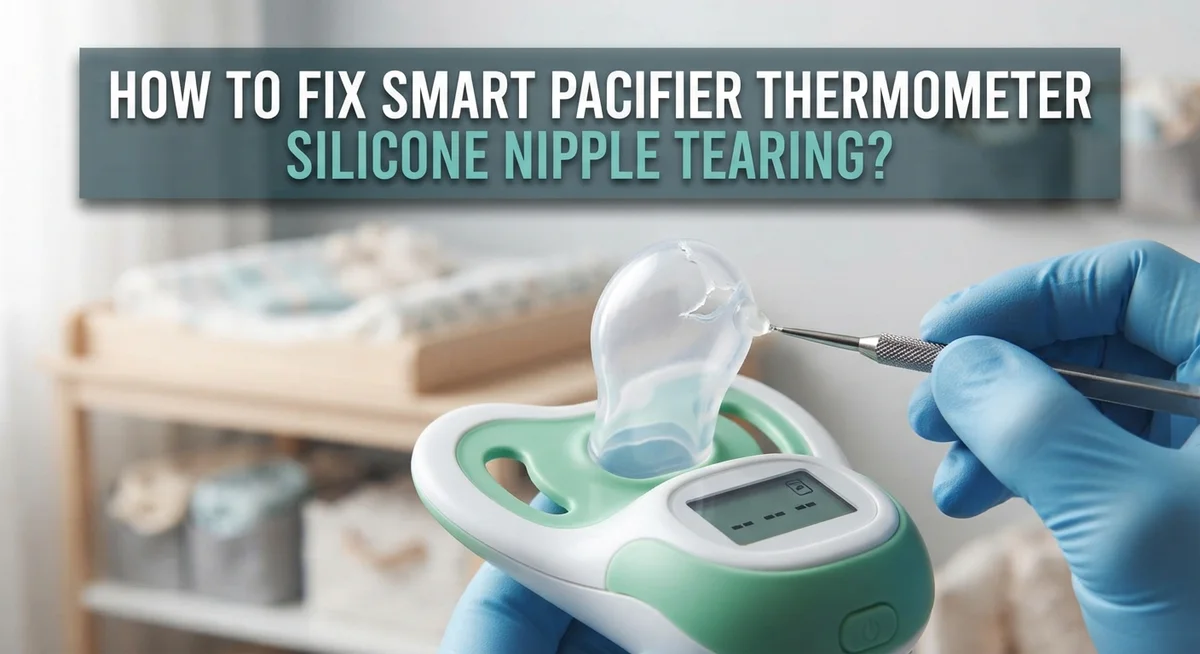
A torn nipple on your smart pacifier thermometer poses a real choking hazard. You need to assess the damage carefully before deciding whether to repair or replace it.
Start by examining the tear size. Small microtears are invisible to the naked eye, but they grow quickly with use. Hold the pacifier up to bright light and rotate it slowly. Look for any splits, holes, or areas where the silicone appears thinner than the rest.
Next, perform a stretch test. Gently pull the nipple in all directions using light pressure. A healthy nipple returns to its original shape immediately. If the nipple stays stretched or feels loose, the silicone has lost its integrity.
Check for leaking. If your smart thermometer has a water resistant design, moisture inside signals a breach. This means bacteria can enter the device, making the pacifier unsafe and unhygienic.
Assess the tear location. Tears near the base are more serious because they affect the structural support. Tears on the tip may seem minor, but they expand rapidly during sucking.
The safest choice is replacement rather than repair. Silicone cannot be reliably patched because the repair site becomes a weak point. The bond between old and new material fails under the pressure your baby applies.
Document when the tear appeared. If your pacifier failed before the 4 to 6 week replacement window, the nipple walls were too thin for the design. This information helps you choose a better option next time.
Never attempt to use a torn pacifier. Your baby’s safety matters more than the cost of replacement. Remove it from circulation immediately and store it separately so no one accidentally uses it.
Correct Usage Techniques To Prevent Premature Tearing
Correct usage prevents most nipple damage before it starts. Your technique matters more than you might think.
Insert at an angle toward the roof of your baby’s mouth. Pushing straight in creates unnecessary tension on the silicone. This angled approach distributes pressure evenly across the nipple surface. Your baby’s natural sucking motion works better with this positioning too.
Allow your baby to hold the pacifier naturally without forcing it deeper. Many parents accidentally push too hard, which strains the material beyond its limits. Let your baby control the depth and intensity of sucking.
Avoid excessive pulling or tugging during removal. Gently wiggle the pacifier side to side, then ease it out slowly. Yanking creates stress points that lead to microtears invisible to the naked eye. These hidden tears expand rapidly during normal use.
Keep the shield clean and dry between uses. Moisture combined with saliva breaks down silicone faster than dry conditions. Wash the entire pacifier with mild soap and warm water daily.
Store your smart pacifier thermometer in a clean, dry container away from direct sunlight. Heat and UV exposure degrade silicone material significantly. Keep it separate from other toys to prevent damage from being crushed or bent.
Never leave the pacifier in hot water or sterilize at temperatures above manufacturer recommendations. Extreme heat accelerates material breakdown and can damage the thermometer component.
Rotate between multiple pacifiers if possible. This reduces wear on any single unit and extends overall lifespan. Constant use without breaks puts continuous stress on the nipple material.
Check the pacifier before each use, not just during inspections. Quick visual scans catch problems early. Your baby’s safety depends on catching issues before they become dangerous.
Following the Recommended Replacement Schedule
A replacement schedule protects your baby from using a worn out smart pacifier thermometer. Most manufacturers recommend replacing the pacifier every 4 to 6 weeks. Some babies need replacements even sooner, around the 4 week mark, depending on how heavily they use it.
Mark your calendar when you first use the pacifier. This simple step helps you track when replacement time arrives. Write the start date on the pacifier’s storage container or set a phone reminder for week 4. Staying organized prevents you from accidentally using an expired pacifier.
Silicone nipples deteriorate gradually, even with perfect care. The material becomes softer and more prone to tearing as weeks pass. Invisible microtears develop inside the silicone long before you see visible damage. These tiny tears can suddenly split open during use.
Both latex and silicone pacifiers follow the same 4 to 6 week timeline. Don’t assume one type lasts longer than the other. Replace them on schedule regardless of the material.
Don’t wait for obvious damage to appear. Proactive replacement is safer than reactive replacement. Your baby’s safety matters more than saving money by stretching out the pacifier’s life.
Keep backup pacifiers on hand so you always have a fresh one ready. This prevents the temptation to use an older pacifier when the current one needs replacement. Backups also help during travel or when one gets lost.
Check the manufacturer’s specific recommendations for your model. Some smart thermometer pacifiers may have different replacement intervals based on their design. Follow those guidelines for best results and optimal safety for your baby.
Common Mistakes That Accelerate Wear and Tear
Babies and parents often make habits that speed up silicone nipple damage. Understanding these mistakes helps you keep your smart pacifier thermometer safe longer.
Inserting the pacifier incorrectly causes immediate stress on the silicone. Many caregivers push the pacifier straight into the baby’s mouth. This creates tension across the entire nipple surface. The correct method angles the pacifier toward the roof of the mouth instead. This simple change reduces strain significantly.
Aggressive removal damages the nipple faster than you might expect. Pulling straight out tears the silicone fibers. Yanking or tugging creates micro damage that compounds over time. Always wiggle the pacifier gently from side to side before easing it out slowly.
Storing pacifiers incorrectly weakens the material. Leaving them in direct sunlight breaks down silicone faster. Hot environments also degrade the material. Keep your pacifier in a clean, dry container away from heat and light sources.
Sterilizing at wrong temperatures causes premature deterioration. High heat damages silicone even when you follow standard cleaning routines. Check your manufacturer’s specific temperature limits before sterilizing. Many pacifiers have lower heat tolerances than you assume.
Allowing excessive moisture to linger creates brittleness. Wet pacifiers stored in closed containers develop sticky surfaces. Always air dry your pacifier completely before storing it away.
Letting babies chew or bite the nipple accelerates wear dramatically. The silicone flattens and tears under constant pressure. Encourage your baby to suck gently rather than chew.
These common mistakes work together to shorten your pacifier’s lifespan. Avoiding them keeps your smart thermometer functional and safe for your baby.
Troubleshooting Inaccurate Temperature Readings Linked to Nipple Damage
When your smart pacifier thermometer gives inconsistent temperature readings, nipple damage is often the culprit. Torn or degraded silicone changes how your baby’s mouth contacts the sensor, leading to false readings that don’t reflect actual body temperature.
Microtears develop invisibly over time in silicone material. These tiny ruptures start small but grow larger with each use. When your baby sucks, their mouth position shifts slightly, and damaged areas create air pockets between the sensor and mouth tissue. This gap prevents accurate heat transfer to the thermometer.
Visible damage like cracks, enlarged areas, or sticky patches all contribute to reading errors. Even if the tear seems minor, it disrupts the seal needed for proper temperature detection. Your smart thermometer relies on direct contact with mouth tissue to measure heat accurately.
Daily pull tests catch damage early. Gently stretch the nipple in all directions before each use. Look for any resistance, stickiness, or signs of material breakdown. If the nipple feels different than normal, stop using it immediately.
Stiffness or brittleness also signals problems. When silicone loses its flexibility, it doesn’t conform properly to your baby’s mouth. This poor fit prevents consistent sensor contact, making readings jump around unpredictably.
The solution is straightforward: replace your smart pacifier thermometer every 4 to 6 weeks. Don’t wait for obvious damage to appear. Regular replacement ensures your sensor maintains proper mouth contact and delivers reliable temperature readings.
Keep backup pacifiers available so you always have a fresh one ready. Mark your calendar when you first use each pacifier. This tracking system prevents you from accidentally using an overdue unit.
Final Thoughts
Silicone nipple tearing is common, but it does not have to catch you off guard. Regular checks and timely replacement keep your baby safe and your thermometer readings accurate.
Remember that torn or damaged nipples are more than an inconvenience. They pose a real choking hazard for your little one.
The 4 to 6 week replacement rule exists for good reason. Silicone breaks down even when you cannot see damage with your eyes.
Daily pull tests take only seconds but catch problems early. This small habit protects your baby every single day.
Watch for warning signs like stickiness, cracks, or an enlarged nipple shape. These signals mean it is time for a fresh pacifier.
Good design matters too. Choose pacifiers with single piece construction and shield diameters of at least 1.5 inches with proper ventilation.
The nipple shape matters just as much as the material. A soft nipple with a gradual slope and rounded tip works best for your baby’s comfort and safety.
Insertion technique plays a bigger role than most parents realize. Angle the pacifier toward the roof of the mouth instead of straight in.
This small adjustment reduces stress on the silicone right from the start. It also helps prevent premature tearing over time.
Keep in mind that smart thermometers have natural limitations too. When your baby sucks, their mouth opens slightly, which can affect reading accuracy.
Understanding this helps you interpret readings with realistic expectations. It also reminds you why proper nipple care matters for both safety and accuracy.
Simple habits make the biggest difference here. Mark replacement dates, perform daily checks, and always keep backups ready.
Your attention to these small details protects your baby every day. Stay consistent with these steps and tearing problems become far less common in your routine.
Frequently Asked Questions
Why does my smart pacifier thermometer nipple tear so easily?
Silicone develops invisible microtears over time. The material gets softer with use, and the nipple walls may be too thin for the geometry. Babies use these pacifiers constantly, which creates wear that happens faster than you’d expect. The nipple stretches repeatedly during use and cleaning.
Temperature changes also stress the silicone. Hot sterilization and cold storage create expansion and contraction cycles. This weakens the material from the inside out, even when you can’t see damage yet.
How can I tell if the nipple is damaged before it tears completely?
Check for these warning signs: an enlarged or swollen nipple, visible cracks, stickiness, or brittleness. The material might feel different in your fingers. Do a daily pull test by gently stretching the nipple in all directions before each use. This takes seconds but catches problems early.
If the nipple feels stiff or unusually soft, damage is likely present. Discoloration or dull patches also signal trouble. Don’t wait for a complete tear to replace it.
When should I replace a smart pacifier thermometer?
Replace every 4 to 6 weeks. Some need replacement as early as 4 weeks depending on how often your baby uses it. Keep backup pacifiers available so you always have a fresh one ready.
This replacement schedule applies to both latex and silicone pacifiers. It’s not about cost. A torn nipple becomes a choking hazard that you want to avoid entirely.
Can a torn nipple affect temperature readings?
Yes. Microtears and damage create gaps where air enters. Your baby’s mouth opening slightly during sucking also causes inaccurate readings. Even small rips disrupt the seal needed for accurate temperature measurement.
A damaged nipple won’t give you reliable data when you need it most.

Hi, I’m Sonny Dawson, the creator and voice behind ConvertResizeGen. 👋 I’m a passionate tech enthusiast who loves exploring the latest gadgets, devices, and electronics that shape the way we live and work. Through my website, I share honest, hands-on reviews of trending Amazon products to help you make smarter buying decisions.