How To Fix Portable Oxygen Concentrator Intake Filter Tearing?
Your portable oxygen concentrator keeps you moving. It helps you breathe easy at home or on the go.
But a torn intake filter can quietly cause big problems. It lets dust and debris slip into your device.
This directly affects your oxygen purity. It can also strain your machine over time.
Many users notice small tears too late. By then, the filter needs a full replacement.
The good news? You can catch these issues early. A simple weekly check can save you time and stress.
This guide walks you through the entire process. You will learn how to spot filter damage fast.
We cover the exact steps to remove, clean, and inspect your filter safely. You will also learn the difference between cleaning and replacing your filter.
Plus, we highlight common mistakes people make. Things like using soap or brushes that harm the filter material.
By the end, you will know how to keep your concentrator running smoothly. Your device will stay efficient. Your oxygen supply will stay pure.
Let’s get started and protect your breathing device the right way.
In a Nutshell
Here’s a quick rundown to fix your intake filter issue fast:
-
Turn off the unit first. Always power down your concentrator before touching the filter. This keeps you safe and protects the machine.
-
Remove and check the filter. Take it out gently and look closely for tears or holes. Small damage can affect your oxygen quality.
-
Rinse with plain water only. Use warm or cool tap water to clean it. Never use soap, detergents, or brushes on the material.
-
Dry completely before reinstalling. A wet filter can cause problems inside your device. Let it air dry fully first.
-
Replace torn filters immediately. If you spot rips or holes, cleaning won’t help. You need a new filter right away.
-
Make weekly checks a habit. Regular inspection catches issues early. This simple routine keeps your device working properly and your oxygen pure.
Following these steps helps you avoid bigger problems down the road. Your concentrator stays reliable, and you breathe easier knowing it’s working right.
Why Intake Filters Tear and Why It Matters
Intake filters tear for several practical reasons. Dust and debris buildup creates pressure inside the filter material. Over time, this stress weakens the fibers and causes small tears to form. Regular use without cleaning speeds up this damage.
Dry air environments also contribute to filter deterioration. When humidity levels drop, filter materials become brittle and crack more easily. This is especially common in winter months or arid climates. The constant airflow through the filter adds additional strain to weakened areas.
Physical handling causes tears too. Rough removal, aggressive cleaning with brushes, or dropping the filter can puncture the material instantly. Even small holes compromise the entire filter’s effectiveness.
Why torn filters matter so much goes beyond just needing replacement. A damaged filter allows unfiltered air to enter your concentrator. This means dust, pollen, and other particles bypass the cleaning system entirely. Your oxygen output becomes less pure and less reliable.
A torn filter also forces your machine to work harder. The device compensates by running longer cycles to achieve proper oxygen levels. This increases energy consumption and puts extra stress on internal components. Your concentrator may overheat or shut down unexpectedly.
Most importantly, compromised oxygen quality directly affects your health. You depend on clean, concentrated oxygen for your respiratory needs. Contaminated oxygen can irritate your lungs and reduce the treatment benefits you receive.
Early detection prevents these problems. Weekly inspections catch small tears before they worsen. You spot damage during routine cleaning when you rinse the filter under water. This simple habit saves you money on emergency repairs and keeps your oxygen supply consistent.
Ignoring visible tears leads to costly device failures. Internal components get clogged with debris that should have been filtered. Replacement parts become necessary when preventive care could have solved the issue. Taking five minutes weekly for inspection protects both your device and your health.
Signs Your Filter Needs Attention
Your portable oxygen concentrator will show you clear warning signs when the intake filter needs attention. Learning to spot these signals keeps your device working properly.
Visible tears or holes are the most obvious sign. Check your filter weekly under good lighting. Small rips may start at the edges or corners. Larger holes appear in the center where air pressure is strongest. If you see any opening in the filter material, replacement is necessary right away.
Reduced oxygen output often means filter damage. You might notice weaker oxygen flow than usual. Your concentrator may run longer to reach the same pressure levels. This happens because tears force air to bypass the filtration system entirely.
Increased noise from your device signals filter problems too. A torn filter causes the motor to work harder. You will hear louder humming or rattling sounds during operation. This extra strain on the motor indicates immediate inspection is needed.
Dust or debris near the outlet suggests filter failure. When the filter tears, particles escape into your oxygen supply. You might see visible dust around the machine or smell unusual odors. This directly affects the purity of oxygen you receive.
Difficulty starting the machine can point to filter blockage or damage. Your concentrator may hesitate before powering on normally. The device struggles when air cannot flow freely through a torn filter.
Visible discoloration or dark spots on the filter material require attention. These marks show accumulated dirt or potential mold growth. Discoloration combined with tears means replacement cannot wait.
Check your filter every seven days without fail. Early detection prevents serious problems. Do not ignore these warning signs. A small tear today becomes a major issue tomorrow. Replace damaged filters immediately to maintain oxygen quality and device performance.
Step-by-Step: Inspecting and Cleaning Your Intake Filter
Start by turning off your portable oxygen concentrator completely. This protects you from accidental oxygen release and keeps you safe while working with the unit.
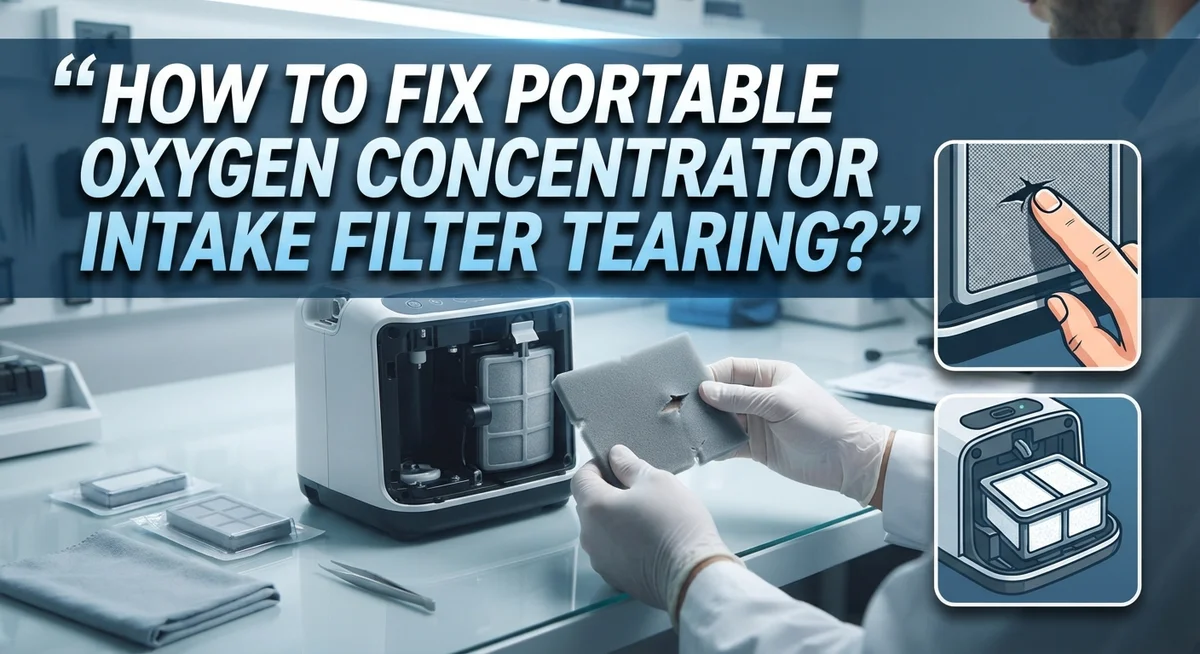
Next, locate your intake filter. Most portable concentrators have the intake filter on the side or back of the machine. Check your device manual if you’re unsure where it sits. Gently remove the filter by twisting or unclipping it, depending on your model’s design.
Hold the filter up to a light source and inspect it carefully. Look for holes, tears, or thin spots in the filter material. Small holes may be hard to see, so rotate the filter slowly under good lighting. Pay special attention to the edges and corners where damage often starts.
Once you’ve inspected it, rinse the filter under cool or warm tap water. Let water flow gently through the filter material. Use plain water only – no soap, detergents, or cleaning brushes. These harsh products damage the delicate filter material and reduce its effectiveness.
Tap the filter gently against your palm to loosen stubborn dust and debris. Don’t bang it hard or scrub it. The goal is removing loose particles without harming the filter structure.
After rinsing, stand the filter upright and let it air dry completely. This takes several hours or overnight. Never reinstall a wet filter because moisture reduces oxygen purity and can damage your machine’s internal components.
While your filter dries, wipe the exterior of your concentrator with a damp cloth. This removes dust and debris that could enter the machine. Check that intake and exhaust vents are clear and unblocked.
Once your filter is completely dry, reinstall it by reversing the removal process. Turn your concentrator back on and listen for normal operation sounds. Make filter inspection and cleaning part of your weekly routine to catch problems early.
How to Properly Replace a Torn Filter
When your portable oxygen concentrator filter tears, cleaning won’t fix it. You need to replace the damaged filter with a new one. This section walks you through the proper replacement process step by step.
Start by powering off your device completely. Never attempt filter replacement while the machine runs. This keeps you safe and prevents damage to internal components.
Next, locate your intake filter. Most models have the filter on the front or side of the unit. Check your device manual if you’re unsure about the exact location.
Gently remove the old torn filter. Most filters slide out or twist counterclockwise to release. Handle it carefully to avoid spreading any debris into the device opening.
Inspect the filter housing before installing a new one. Wipe the inside with a clean, dry cloth. Remove any dust or particles stuck in the compartment.
Take your replacement filter and examine it before installation. Make sure it matches your device model exactly. Check that all seals and edges look intact and undamaged.
Insert the new filter into the housing. Push it straight in or twist it clockwise, depending on your model design. You should hear or feel a slight click when it seats properly.
Run your hands around the filter edges to confirm it sits flush. No gaps should exist between the filter and housing. Gaps allow unfiltered air to bypass the filter completely.
Power on your device and listen for normal operation. The machine should start smoothly without unusual sounds. Your oxygen output should return to normal levels.
Mark your calendar for the next weekly inspection. Even with a new filter, regular checks keep your device running well. Caught early, small tears prevent major problems later.
Replace your filter immediately if you notice any damage during inspections. Don’t wait or attempt repairs. A new filter costs far less than device replacement or health complications from poor oxygen quality.
Best Practices for Weekly Maintenance
Weekly maintenance keeps your portable oxygen concentrator running smoothly. Consistency matters more than perfection when you care for your device regularly.
Start your week by setting a specific day for filter checks. Pick the same day each time so the habit sticks. This routine prevents you from forgetting and keeps your oxygen flow steady.
Before you touch anything, power off your concentrator completely. Safety comes first when you work with medical equipment. Wait a few seconds for the device to fully shut down.
Locate your intake filter and gently remove it from the housing. Hold it up to natural light and look for any tears, holes, or damage. Even tiny openings can reduce oxygen purity significantly. If the filter looks clean with no visible damage, you can skip the rinse that week.
When you do clean, use only cool or warm tap water. Never use soap, detergents, or harsh chemicals because they damage the filter material. Tap the filter gently against your palm to shake loose dust and debris. This simple motion removes most particles without harming the filter.
After rinsing, stand your filter upright in a clean, dry area. Air drying takes several hours, so plan ahead. Never reinstall a wet filter because moisture reduces oxygen output and can damage internal components.
While your filter dries, wipe down the exterior of your concentrator with a damp cloth. This prevents dust from accumulating around vents and intake areas. Check that all tubing connections feel secure and show no kinks.
Mark your calendar after each maintenance session. This simple step ensures you never miss a weekly check. Your lungs depend on clean, efficient oxygen delivery, and weekly maintenance guarantees your device performs at its best.
Common Mistakes That Damage Filters
Many people damage their portable oxygen concentrator filters without realizing it. Understanding these common mistakes helps you keep your device working properly and your oxygen supply clean.
Using harsh chemicals or brushes is the biggest mistake. Soap, detergents, and abrasive scrubbing tools destroy the delicate filter material. These products break down the fibers that trap particles. The filter becomes useless even if no visible tears appear. Stick to plain water only when cleaning your filter.
Reinstalling wet filters causes serious problems. A damp filter traps moisture inside your device. This moisture promotes mold and bacteria growth. Your oxygen becomes contaminated. Wet filters also restrict airflow, forcing your concentrator to work harder. Always wait until your filter is completely dry before putting it back in.
Skipping regular inspections leads to bigger issues. Many people wait until their device stops working properly. By then, small tears have become large holes. Oxygen purity drops significantly. Weekly inspections catch damage early when it matters most. Hold your filter up to light and look carefully for any holes or thin spots.
Ignoring visible tears or holes is dangerous. A torn filter cannot be repaired by cleaning. Contaminated oxygen reaches your lungs. You must replace the filter immediately when you spot damage. Continuing to use a torn filter defeats the purpose of having an oxygen concentrator.
Allowing dust to accumulate on your concentrator’s exterior is another common mistake. Debris near intake vents gets sucked into your filter faster. This shortens your filter’s lifespan. Wipe your device’s exterior weekly with a damp cloth to reduce dust buildup.
Kinks or blockages in your tubing also damage filters indirectly. When airflow is restricted, your filter works overtime. This causes premature wear and tearing. Check your tubing regularly for bends or obstructions. Keep vents clear of blankets, furniture, and other objects.
Troubleshooting Persistent Tearing Issues
When your portable oxygen concentrator filter tears, you need to identify what’s causing the damage to prevent it from happening again. Persistent tearing often points to underlying issues that go beyond the filter itself.
One common cause is improper filter removal. If you pull too hard or at an angle, you can create small tears in the delicate filter material. Always remove filters straight out and with gentle pressure. Twisting or yanking the filter damages it quickly.
Another issue is debris buildup around the filter housing. When dust accumulates, it forces the filter to work harder and creates stress points. Check your intake vents weekly. Make sure nothing blocks the air pathway leading to your filter.
Air pressure problems can also cause tears. If your concentrator’s motor runs too fast or the intake pressure is too high, it puts excessive strain on the filter material. Listen for unusual sounds during operation. Loud humming or whistling suggests pressure issues.
Environmental factors matter too. Extremely dry air causes filter material to become brittle and crack easily. If you live in a dry climate, consider running a humidifier near your device during maintenance sessions.
Check your tubing for kinks or blockages as well. When air cannot flow freely through your tubing, pressure backs up into the filter housing. This reverse pressure damages the filter from the inside out. Inspect all tubing connections monthly.
Finally, examine your filter housing for sharp edges or debris inside. A rough spot in the housing can puncture your new filter immediately after installation. Run your fingers gently inside the housing before inserting a new filter.
If tearing continues after addressing these issues, your device may need professional inspection. Contact a service center to check your motor speed and internal pressure levels. They can determine if your concentrator needs calibration or repair.
Final Thoughts
Taking care of your portable oxygen concentrator’s intake filter does not need to feel complicated. Small, consistent habits make the biggest difference in preventing tears and damage.
Check your filter every week. This simple step catches problems early, before they turn into bigger issues with your device’s performance.
Remember that clean water is your best tool. Skip the soap, skip the brushes, and let your filter dry fully before you put it back.
A torn filter cannot be fixed. If you spot damage, replace the filter right away to keep your oxygen purity safe and reliable.
Your concentrator depends on clean air intake to work properly. Protecting the filter protects your breathing support system as a whole.
Pay attention to warning signs like frequent tearing or unusual device sounds. These signals often point to deeper issues that need attention.
Environmental factors, tubing problems, and housing damage all play a role in filter health. Address these areas alongside your filter care routine.
If tears keep happening despite your best efforts, do not ignore the pattern. Professional inspection can identify hidden causes you might miss on your own.
Your health depends on this device working correctly. Taking a few minutes each week for filter checks protects both your equipment and your breathing.
Good maintenance habits become second nature over time. Soon, checking your filter will feel as routine as any other daily task.
Stay consistent, stay observant, and address issues quickly. This approach keeps your portable oxygen concentrator running well for years to come.
Simple care today means fewer problems tomorrow. Your filter, your device, and your health all benefit from this steady attention.
Frequently Asked Questions
How often should I inspect my portable oxygen concentrator filter?
You should check your filter every week. Regular inspection helps you catch tears or damage before they affect your device’s performance. During your weekly check, look for holes, visible tears, or worn spots on the filter material.
Inspecting frequently prevents small problems from becoming bigger issues. It takes just a few minutes and keeps your oxygen concentrator running smoothly.
What’s the best way to clean a torn filter?
A torn filter cannot be cleaned back to working condition. You need to replace it instead. Cleaning only works for dirty filters without damage.
If your filter isn’t torn but just dusty, rinse it gently under cool or warm tap water. Let it air dry completely before putting it back in your device. Never use soap, detergents, or brushes, as these damage the filter material.
Why does my filter keep tearing repeatedly?
Several things can cause ongoing tears. Check your tubing for kinks or blockages that force extra pressure through the filter. Examine your filter housing for sharp edges or debris inside that might puncture the material during use.
Improper filter removal can also damage the filter. Remove it slowly and carefully. If tearing continues after you address these issues, your device may need professional inspection to check for motor or pressure problems.
How long does a filter take to dry after cleaning?
Your filter must air dry completely before you reinstall it. This usually takes several hours depending on humidity and temperature in your home.
Never rush this step. Reinstalling a wet filter causes serious problems and reduces your device’s ability to deliver clean oxygen.

Hi, I’m Sonny Dawson, the creator and voice behind ConvertResizeGen. 👋 I’m a passionate tech enthusiast who loves exploring the latest gadgets, devices, and electronics that shape the way we live and work. Through my website, I share honest, hands-on reviews of trending Amazon products to help you make smarter buying decisions.