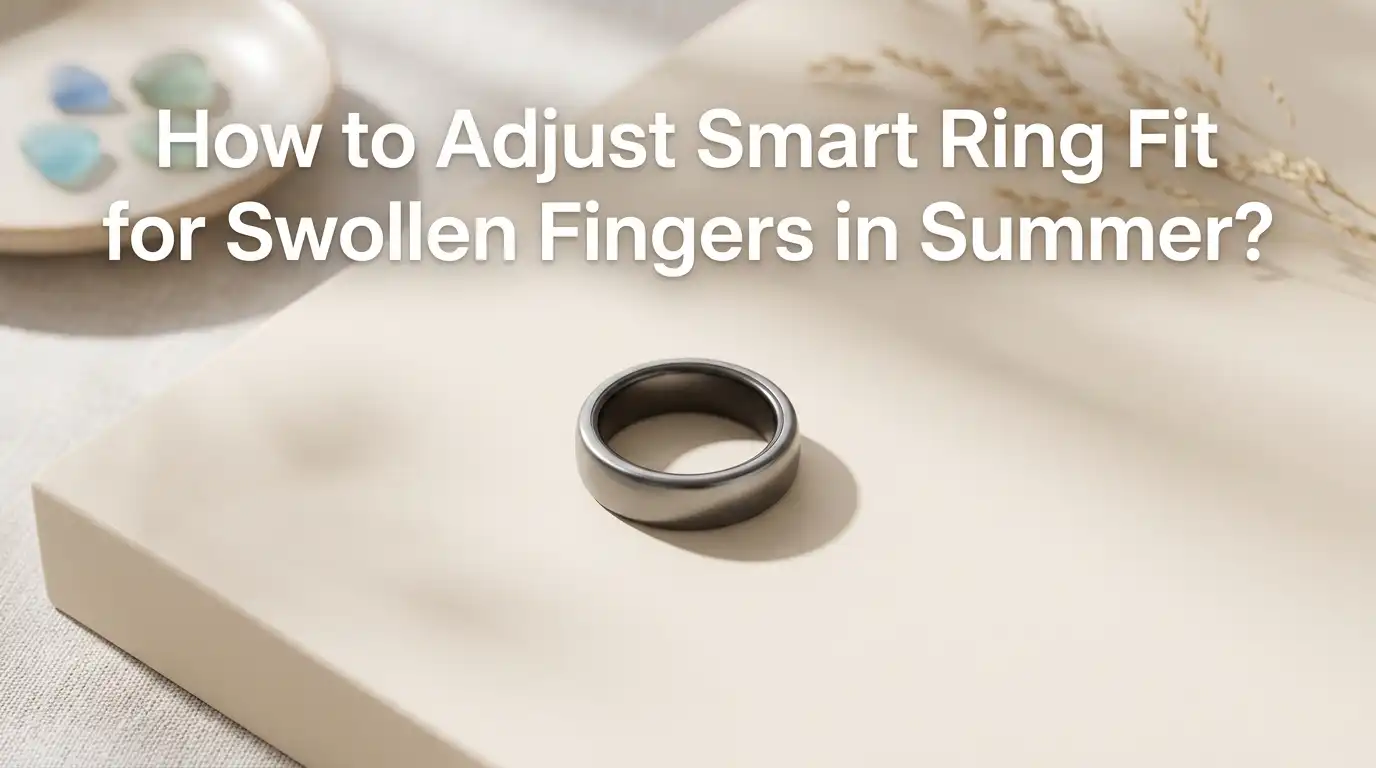
How to Adjust Smart Ring Fit for Swollen Fingers in Summer?
Summer heat and your smart ring do not always get along. If you wear an Oura Ring, Samsung Galaxy Ring, or any other smart ring, you have probably noticed your ring feels tighter once temperatures rise.
Your fingers swell in hot weather, and that snug fit from spring suddenly feels like a squeeze. This is not just uncomfortable. A poor fit can affect your ring’s sensor accuracy, disrupt sleep tracking, and even cause skin irritation.
The good news? You do not need to buy a new ring or give up wearing yours until fall. There are simple, practical ways to adjust your smart ring fit and keep it comfortable all summer long.
Key Takeaways
- Finger swelling in summer is completely normal. Heat causes your blood vessels to widen (a process called vasodilation), which sends more blood to your extremities. Humidity makes it worse because your body retains more fluid. Your finger size can shift by up to half a ring size on a hot day, which is more than enough to make a smart ring feel painfully tight.
- You do not need to resize or replace your smart ring for seasonal changes. Most summer fit issues are temporary and can be solved with simple adjustments like cooling your hands, switching fingers, or using silicone ring size adjusters. Save permanent changes for problems that last all year.
- Smart ring accuracy depends on proper fit. If your ring is too tight, it becomes hard to remove and can restrict circulation. If it is too loose, the sensors lose contact with your skin and your health data becomes unreliable. Finding the middle ground matters more in summer than any other season.
- Hydration and diet play a direct role in finger swelling. Drinking enough water and reducing your salt intake can lower fluid retention and keep your fingers closer to their baseline size. These are small changes that make a big difference in ring comfort.
- Timing your ring wear around your daily routine helps. Fingers tend to be larger in the afternoon and after meals. Knowing your body’s patterns lets you plan ahead and avoid the worst discomfort.
Why Do Fingers Swell in Summer Heat
Your body has a built in cooling system. When outside temperatures rise, your blood vessels expand to release heat through the skin. This process is called vasodilation. More blood flows to your hands and feet, which causes them to puff up slightly.
Humidity adds another layer. When the air is already saturated with moisture, your body has a harder time releasing sweat. This leads to fluid retention, especially in your extremities. According to medical professionals, hot weather is one of the most common causes of swollen fingers.
Even modest swelling can change your finger size by up to half a ring size. That may not sound like much, but smart rings are rigid.
Unlike traditional jewelry made from thin, flexible metal, smart rings are thicker and packed with sensors. There is zero give. So even a small amount of swelling can turn a comfortable fit into a tight, stuck ring that you cannot easily remove.
How Swollen Fingers Affect Smart Ring Accuracy
Smart rings rely on direct skin contact to track your heart rate, blood oxygen levels, body temperature, and sleep quality. The sensors sit on the underside of the ring, pressed against the palm side of your finger. When the fit changes, so does the data.
A ring that is too tight will still read your vitals, but it may cause discomfort that disrupts your sleep. It can also leave marks or restrict blood flow during extended wear.
On the other hand, a ring that becomes loose from swelling going down (like in the morning after a cool night) can spin on your finger. When the sensors rotate away from the right position, readings become inconsistent.
Pros of a snug fit: Reliable sensor contact, fewer data gaps, lower risk of losing the ring.
Cons of a snug fit: Difficult removal, potential skin irritation, discomfort during swelling.
The goal is a fit that stays in place without squeezing. In summer, this balance shifts daily, so you need strategies to manage it.
Cool Your Hands Before Putting On Your Ring
One of the fastest ways to reduce finger swelling is to cool your hands with cold water for 30 to 60 seconds before sliding on your smart ring. Cold temperatures cause blood vessels to constrict, which reduces blood flow to your fingers and temporarily shrinks them back closer to their baseline size.
You can also hold a cold drink or an ice pack for a minute before putting on your ring. This trick works especially well in the morning or before bed when you want to make sure the ring fits properly for overnight sleep tracking.
Pros: Instant results, no cost, completely safe.
Cons: The effect is temporary and wears off as your hands warm up again. You may need to repeat this throughout the day.
This method is best used as a quick fix, not a long term solution. Combine it with other strategies on this list for the best results.
Switch Your Ring to a Different Finger
Not all fingers swell the same amount. Many smart ring users report that their index finger swells more than their middle or ring finger during hot weather. If your ring feels too tight on one finger, try moving it to another.
Most smart ring manufacturers, including Oura, allow you to wear the ring on different fingers. The sensors will still work as long as the ring fits snugly on the new finger. Some users keep their ring on the index finger during winter and switch to the middle finger in summer because it tends to be slightly thinner.
Pros: Free, easy, and does not require any accessories or tools.
Cons: The ring may fit differently on each finger, and you might need to recalibrate your device. Not all fingers provide equally accurate readings for every metric.
Before committing to a finger switch, wear the ring on the new finger for at least 24 hours to make sure the fit stays consistent throughout the day and night.
Use Silicone Ring Size Adjusters
Silicone ring size adjusters are small, clear inserts that fit inside your ring band. They are designed to fill the gap between the ring and your finger when the ring is too loose. While summer swelling usually makes rings tighter, these adjusters become useful during cooler parts of the day or in air conditioned environments where your fingers shrink back down.
These adjusters come in various thicknesses and can be trimmed to fit. They sit on the inside of the band and are nearly invisible. Many smart ring users rely on them to maintain a consistent fit across changing conditions.
Pros: Affordable, reusable, easy to apply and remove, and they do not damage the ring.
Cons: They may slightly interfere with sensor contact if placed over the sensor area. Position them on the top or sides of the ring band to avoid this issue.
For best results, choose adjusters specifically labeled as compatible with smart rings. These are thinner and less likely to block the sensors on the underside of the band.
Stay Hydrated and Reduce Salt Intake
This might sound unrelated to your smart ring, but what you eat and drink directly affects your finger size. Dehydration causes your body to hold on to water, which increases swelling. Drinking enough water throughout the day helps your body flush out excess fluids and keeps swelling under control.
Salt has a similar effect. A high sodium meal can cause noticeable fluid retention within hours. If you have ever woken up with puffy fingers after eating salty food the night before, you know exactly how this feels. Medical experts recommend limiting sodium and staying well hydrated, especially during hot months.
Pros: Improves overall health, reduces swelling naturally, and costs nothing.
Cons: Results are not instant. It takes consistent effort over days and weeks to see a meaningful difference in baseline swelling.
Aim for at least eight glasses of water a day and watch your intake of processed foods, which tend to be high in sodium.
Elevate Your Hands Throughout the Day
Gravity pulls fluid down into your hands and fingers when your arms hang by your sides. This is why your fingers often feel puffiest after a long walk in the heat or after standing for extended periods. Elevating your hands above your heart encourages that fluid to drain back into your body.
You can do this by resting your hands on a pillow while sitting, raising your arms overhead for a few minutes, or simply being mindful of your hand position during the day. Even small adjustments like resting your hand on a desk instead of letting it dangle can make a difference.
Pros: Simple, free, and effective for reducing mild swelling quickly.
Cons: Not practical during all activities. You cannot keep your hands elevated while cooking, driving, or exercising.
Try elevating your hands for five to ten minutes before putting on your smart ring. This is especially helpful in the late afternoon when swelling tends to peak.
Time Your Ring Wear Strategically
Your fingers are not the same size all day. They tend to be slightly larger in the afternoon and evening and smaller in the early morning. Heat, meals, exercise, and even stress all influence your finger size throughout the day.
Smart ring users can take advantage of these patterns. If your ring feels unbearably tight during peak afternoon heat, consider removing it during those hours and putting it back on in the evening or before bed. Most smart rings prioritize sleep tracking, so wearing the ring overnight often matters more than wearing it during a midday workout.
Pros: Reduces discomfort, prevents the ring from getting stuck, and protects your skin.
Cons: You lose activity tracking data during the hours you are not wearing the ring. This trade off is worth it if the alternative is pain or skin damage.
Track your own patterns for a few days. Notice when your ring feels tightest and loosest. Then build a wearing schedule that fits your body’s rhythm.
Do Gentle Finger Exercises to Reduce Swelling
Simple hand and finger exercises can improve circulation and help move excess fluid out of your fingers. These exercises are easy to do anywhere and take only a few minutes.
Try making a fist and then spreading your fingers wide, repeating this ten times. You can also touch each fingertip to your thumb in sequence, or squeeze a soft stress ball for a minute. These movements activate the muscles in your hand and push fluid back through your lymphatic system.
Pros: Free, quick, and can be done anywhere without any equipment.
Cons: The effect is mild and temporary. Exercises work best as a complement to other methods like hydration and elevation.
Do these exercises a few times throughout the day, especially before putting on your smart ring. They are also a good habit for overall hand health.
Know When to Consider a Second Ring Size
If you live in a region with extreme seasonal temperature differences, you might find that no single ring size works comfortably all year. Some smart ring users own two sizes: one for summer and one for winter.
This is a bigger investment, but it solves the problem completely. A ring that is half a size larger gives you breathing room on hot days without sacrificing sensor accuracy. You can then switch back to your regular size when cooler weather returns.
Pros: Perfect fit year round, no daily adjustments needed, and both rings maintain full sensor accuracy.
Cons: Expensive, since you are buying two rings. Not all manufacturers make it easy to switch between rings on the same account.
Before purchasing a second ring, check with your smart ring provider. Some brands allow you to add a second ring to your account or transfer your subscription. Others may require a separate setup.
Avoid Common Mistakes That Make Swelling Worse
Some everyday habits can increase finger swelling without you realizing it. Wearing your ring during a hot shower, for example, causes rapid swelling that can trap the ring on your finger. Exercising in direct sunlight without breaks also drives up your body temperature and fluid retention.
Alcohol consumption is another factor. Alcohol causes blood vessels to dilate and leads to dehydration, both of which make your fingers puff up. If you are heading to a summer barbecue or outdoor event, consider removing your ring beforehand.
Pros of avoiding these triggers: Less swelling, more comfortable ring wear, and lower risk of getting the ring stuck.
Cons: Requires awareness and planning. You have to think ahead about when and where to remove your ring.
Other things to avoid include sleeping with tight wristbands, carrying heavy bags with handles that compress your hands, and spending long periods with your arms hanging straight down in hot weather.
What to Do If Your Smart Ring Gets Stuck
Even with precautions, there may be a moment when your smart ring will not come off your swollen finger. Do not panic. Forcing a ring off can cause injury to your skin and knuckle.
Start by running your hand under cold water for one to two minutes. This will constrict your blood vessels and reduce swelling. Next, apply a generous amount of soap, lotion, or even cooking oil around the ring and your finger. Gently twist the ring back and forth while slowly pulling it over the knuckle.
If that does not work, elevate your hand above your heart for five minutes and try again. You can also wrap dental floss or a thin thread around the finger above the ring, starting at the knuckle and working down. This compresses the tissue and makes it easier to slide the ring over.
If none of these methods work, visit a medical professional. Do not attempt to cut a smart ring at home, as the internal electronics and battery make this dangerous.
Long Term Tips for Smart Ring Comfort in Any Season
Managing your smart ring fit is not just a summer problem. It is a year round practice that gets easier once you understand your body. Here are some habits that help across every season.
Keep a small container of hand lotion with you. Lotion reduces friction and makes putting on or removing your ring easier. Clean the inside of your ring band regularly to remove sweat, sunscreen, and skin oils that build up and make the ring feel tighter than it actually is.
Pay attention to your body over time. Weight changes, medication adjustments, hormonal shifts, and even stress levels can all affect your finger size. The better you know your own patterns, the easier it becomes to anticipate fit issues before they happen.
Finally, if you are shopping for a new smart ring, size it during a warm afternoon rather than a cool morning. This gives you a more realistic baseline and reduces the chance of ending up with a ring that is too small for summer.
Frequently Asked Questions
How much can your finger size change in summer heat?
Your finger size can change by up to half a ring size during hot weather. In cases of high humidity, heavy salt intake, or intense physical activity, the change can be even greater. This is caused by vasodilation and fluid retention, which are normal responses to heat. Smart rings are rigid and do not flex, so even a small change in finger size can have a noticeable impact on fit and comfort.
Can wearing a smart ring on a swollen finger cause health problems?
Wearing a ring that is too tight for extended periods can restrict blood flow and cause discomfort, numbness, or skin irritation. If you notice your finger turning red, feeling cold, or tingling below the ring, remove it immediately and let your finger recover. Occasional tightness from summer swelling is normal, but persistent tightness should not be ignored.
Will a loose smart ring give inaccurate health data?
Yes. Smart rings track heart rate, sleep, and other metrics through sensors on the underside of the band. If the ring is loose and spins on your finger, those sensors lose consistent contact with your skin. This leads to gaps in your data or inaccurate readings. A snug but comfortable fit is essential for reliable tracking.
Is it safe to use ring size adjusters with a smart ring?
Silicone ring size adjusters are generally safe to use with smart rings as long as you place them on the top or sides of the band. Avoid placing adjusters over the sensor area on the underside of the ring, as this can block the sensors and reduce data accuracy. Choose thin, transparent adjusters for the least interference.
Should I buy a larger smart ring size for summer?
If you are between two sizes, choosing the larger size is usually the better option for year round comfort. However, buying a completely different size just for summer is only worth it if your current ring causes significant discomfort for several months each year. Try other solutions first, like cooling your hands, adjusting hydration, and switching fingers.
When should I talk to a doctor about swollen fingers?
You should see a doctor if your finger swelling does not go down when temperatures cool, if it is accompanied by pain or redness, or if the swelling spreads to other parts of your body. Persistent swelling can be a sign of underlying conditions like arthritis, kidney issues, or circulation problems. Summer heat swelling is normal, but swelling that lasts weeks without relief deserves professional attention.
Hi, I’m Sonny Dawson, the creator and voice behind ConvertResizeGen. 👋 I’m a passionate tech enthusiast who loves exploring the latest gadgets, devices, and electronics that shape the way we live and work. Through my website, I share honest, hands-on reviews of trending Amazon products to help you make smarter buying decisions.